

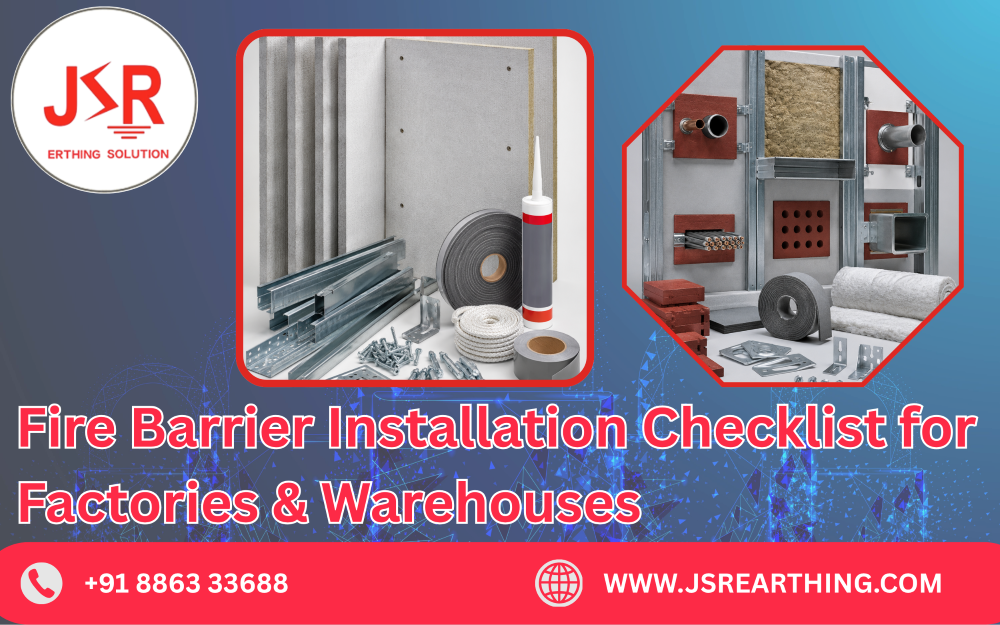
Fire Barrier Installation Checklist
Factories and warehouses carry higher fire risk because they often have electrical panels, cable trays, machinery, storage racks, packaging material and continuous movement of people or goods. Therefore, a proper Fire Barrier Installation Checklist helps owners and safety teams avoid small mistakes during installation. In many industrial buildings, fire can spread quickly through wall openings, service shafts, ducts or cable routes. A well-planned fire barrier system helps slow this spread and supports safe evacuation. For factories in Ahmedabad, Gujarat and across India, correct planning, quality material and expert installation matter as much as the product itself.
Start with a Full Site Safety Review
Before any fire barrier installation, the site should be checked properly. The safety team must identify high-risk areas such as electrical rooms, production zones, chemical storage rooms, server rooms, raw material storage and exit pathways.
In addition, the installer should check existing walls, ceilings, cable openings, duct routes and floor penetrations. This step helps decide where fire compartmentation in factories is needed.
Most importantly, do not install fire barriers only where they look easy to fit. Install them where fire spread risk is high.
Fire Barrier Installation Checklist for Industrial Buildings
A practical checklist helps factory owners and contractors avoid confusion during work. While every site is different, these points are important for most factories and warehouses:
- Check fire-risk zones before installation
- Identify wall, floor and ceiling openings
- Inspect cable trays, ducts and pipe penetrations
- Select suitable fire-rated material
- Seal gaps properly around services
- Maintain proper thickness and coverage
- Avoid loose or temporary sealing work
- Keep installation records and photos
- Add labels where required
- Plan future inspection and maintenance
In simple words, fire barrier installation is not only about closing gaps. It is about creating controlled fire sections inside the building.
Pay Close Attention to Cable, Pipe and Duct Openings
In many cases, fire spreads faster through small service openings than through open doors. Cable trays, AC ducts, utility pipes and electrical routes often pass through walls or floors. However, workers sometimes leave gaps around these services after maintenance work.
Because of this, fire barrier for factories must include proper sealing around all penetrations. The material should fit tightly around cables and pipes without damaging them. At the same time, the installation should allow safe future maintenance where required.
For warehouses, this becomes even more important when packaging material, cartons or plastic stock are stored close to service areas.
Choose Material Based on Fire Risk, Not Only Pric
Low-cost material may look acceptable during installation, but it may not support long-term performance. Therefore, quality material selection is a key part of any factory fire protection system.
Fire barrier boards, sealants, mortars, wraps or fire-rated compounds should match the site condition. For example, an electrical room may need a different approach than a warehouse partition or a duct opening.
Moreover, the material should handle heat, movement, vibration and site conditions. Industrial buildings in Gujarat often face dust, temperature changes and heavy usage, so durability matters.
Coordinate Fire Wall and Fire Barrier Installation Early
Fire wall and fire barrier installation works best when planned during construction or renovation. Architects, project managers, electrical contractors and fire safety consultants should coordinate early.
If the fire barrier contractor joins the project late, many openings may already be closed incorrectly. As a result, rework increases cost and delays the project.
For this reason, factory owners should include fire barrier planning while designing electrical rooms, cable shafts, staircases, storage areas and production sections.
Avoid These Common Installation Mistakes
Some mistakes reduce the effectiveness of fire barrier systems. The most common ones include:
- Leaving small gaps around cables or pipes
- Using ordinary cement or foam instead of fire-rated material
- Ignoring hidden ceiling or floor openings
- Not checking future maintenance access
- Installing without proper surface cleaning
- Forgetting inspection after electrical changes
On the other hand, a careful installation team checks every opening before and after the work. This habit improves safety and reduces future repair issues.
Inspection and Maintenance After Installation
Fire barrier work should not end after installation. Safety officers must inspect the system at regular intervals, especially after electrical, HVAC or civil changes.
In addition, maintenance teams should avoid cutting or removing fire barrier material without proper repair. Even a small unsealed opening can weaken fire compartmentation.
For factories and warehouses, keeping a simple record of installed areas, photos and inspection dates is useful. It also helps during safety audits and project reviews.
Local Support for Ahmedabad and Gujarat Industries
Ahmedabad and Gujarat have many industrial areas, manufacturing units, warehouses and commercial facilities. These sites need practical fire protection planning, not just product supply.
JSR Earthing Solution supports industrial clients with fire barrier and fire protection-related safety solutions. The focus remains on proper material selection, safe system design and correct installation guidance based on site needs.
Conclusion
A clear Fire Barrier Installation Checklist helps factories and warehouses plan safer buildings, reduce fire spread risk and improve long-term safety performance. However, the result depends on correct site inspection, quality material, skilled installation and regular maintenance. For industrial projects in Ahmedabad or Gujarat, choosing an experienced fire barrier contractor can make the whole process smoother and more reliable.
For guidance on fire barrier installation or factory fire protection planning, you can connect with JSR Earthing Solution for practical site-based support.
FAQs
A fire barrier helps slow fire and smoke spread from one area to another. It supports safer evacuation and better fire control.
They are commonly used around storage zones, electrical rooms, service openings, cable routes, ducts and compartment walls.
Yes. Renovation often creates new openings for cables, pipes and ducts. These openings should be sealed properly.
No. Normal material may not perform well during fire conditions. Fire-rated material should be selected based on site needs.
Factories should inspect them regularly, especially after electrical, HVAC or civil maintenance work.
 Previous Post