
Lightning Arrester vs Lightning Protection System: Full Guide
Lightning can damage buildings, machines, electrical panels and safety systems within seconds. For this reason, many property owners search for the right safety solution before installing any system. However, many people get confused between a lightning arrester and a lightning protection system. Both support electrical safety, but they do not work in the same way. A Lightning Arrester vs Lightning Protection System comparison helps buyers understand the right solution for factories, commercial buildings, homes, towers and industrial sites. In simple words, one protects equipment from voltage surges, while the other safely transfers lightning current to the ground.
Understanding the Basic Difference
A lightning arrester mainly protects electrical equipment from sudden high voltage. It works by diverting excess voltage safely towards the earth. Therefore, it is commonly used near electrical panels, transformers, power lines and sensitive systems.
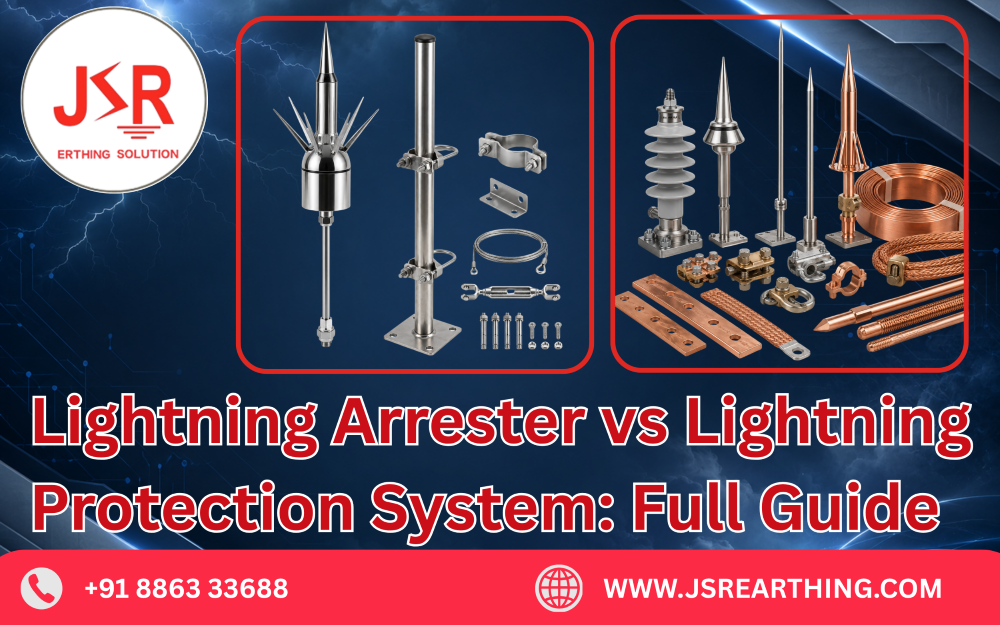
On the other hand, a lightning protection system protects the complete structure from lightning strikes. It includes air terminals, down conductors, earthing electrodes and proper connecting materials. As a result, it creates a safe path for lightning current to travel into the ground.
Lightning Arrester vs Lightning Protection System: Which One Do You Need?
The right choice depends on your building type, electrical load and safety risk. For example, if your main concern is electrical surge protection, a lightning arrester can help. However, if your building is tall, open, industrial or exposed to lightning risk, a full lightning protection system is more suitable.
In many cases, factories, schools, hospitals, warehouses, commercial buildings and towers need both systems. A lightning arrester supports equipment safety. Along with this, a lightning protection system improves structural safety.
How Lightning Current Travels Safely to Ground
A lightning protection system works only when every part connects properly. The air terminal receives the strike first. Then, the down conductor carries the current safely towards the earth. Finally, the earthing system disperses the current into the ground.
Most importantly, poor earthing can reduce the performance of the whole system. Because of this, proper electrode selection, soil condition checking and resistance testing are important before installation.
Key Safety Points Before Installation
Before choosing any lightning safety system, buyers should check a few important points. First, the system design must match the building height and structure. Moreover, the material should be suitable for long-term outdoor use.
Electrical contractors should also check the earthing resistance level. In addition, they should avoid loose joints, weak conductors and poor-quality materials. These small mistakes can affect system performance during a dangerous situation.
Where These Systems Work Best
A lightning arrester is useful for electrical panels, distribution boards, transformers, industrial machines and control systems. It helps reduce damage caused by sudden voltage surges.
A lightning protection system is useful for factories, commercial buildings, residential apartments, hospitals, schools, telecom towers, warehouses and open industrial areas. At the same time, it supports safer building protection when installed with proper earthing.
Maintenance and Testing Matter
Installation is not the final step. Regular inspection keeps the system reliable for long-term safety. Therefore, building owners should check joints, conductors, clamps, earthing points and corrosion.
In addition, testing earth resistance helps identify weak grounding conditions. If the resistance is high, the system may not transfer current effectively. For this reason, periodic maintenance is important for industrial and commercial properties.
How JSR Earthing Solution Supports Safe System Design
JSR Earthing Solution provides practical guidance for earthing, lightning protection and safety system needs. The company focuses on proper material selection, correct installation methods and long-term performance.
Instead of suggesting one common solution for every site, the team understands project requirements first. This approach helps customers choose suitable systems for buildings, factories, commercial projects and industrial applications across Ahmedabad, Gujarat and India.
Conclusion
Understanding Lightning Arrester vs Lightning Protection System helps buyers make a safer decision. A lightning arrester protects electrical equipment from surge voltage, while a lightning protection system protects the structure by safely transferring lightning current to the ground. For better safety, proper design, quality material, correct earthing and regular maintenance are important. For expert guidance, JSR Earthing Solution can help you choose a suitable safety system for your project.
FAQs
A lightning arrester protects electrical equipment from surge voltage. A lightning protection system protects the building structure from lightning strikes.
It depends on your risk level. For structural safety, a full lightning protection system is usually more suitable.
Earthing helps transfer lightning current safely into the ground. Without proper earthing, system performance can become weak.
It is used in factories, towers, schools, hospitals, commercial buildings, apartments and industrial sites.
Yes. Regular testing, joint checking and earth resistance measurement help maintain long-term safety performance.
 Previous Post
 Next Post